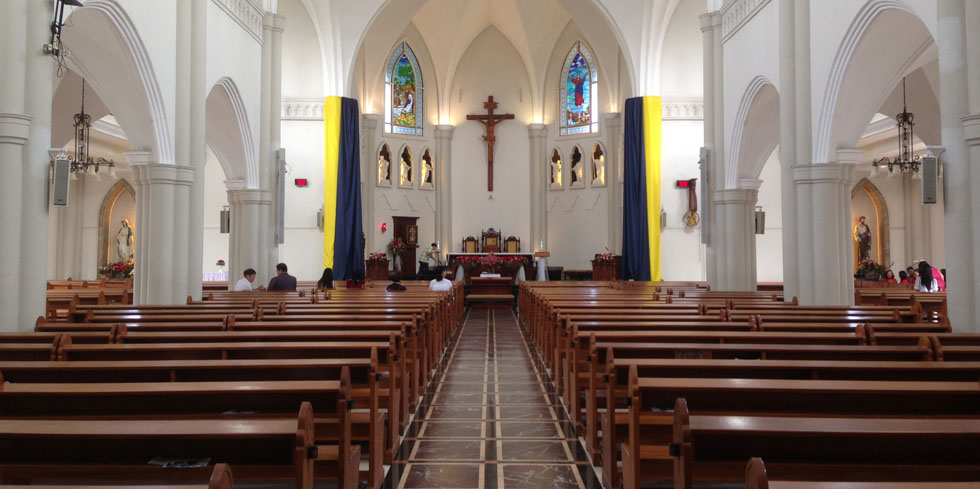
The Sacrament of Marriage in the Catholic Church
Marriage is a sacred institution in the Catholic Church, viewed as a covenant between a man and a woman before God. The Church has specific rules and guidelines regarding marriage, aimed at upholding the sanctity and permanence of this union.
Requirements for a Valid Catholic Marriage
In order for a marriage to be considered valid in the eyes of the Catholic Church, certain conditions must be met:
- The couple must be free to marry, meaning they are not bound by any previous marriage or impediment.
- The marriage must be entered into willingly by both parties, without coercion or duress.
- The couple must intend to form a lifelong, exclusive union that is open to the possibility of children.
- The marriage ceremony must take place in accordance with the prescribed rites of the Church.
Prohibited Marriages
The Catholic Church prohibits certain types of marriages, including:
- Marriages involving close blood relatives.
- Marriages between individuals who are already married or have taken vows of celibacy.
- Marriages that are not freely chosen by both parties.
Annulment and Dissolution
If a marriage is found to be invalid due to a lack of one or more essential elements, it may be declared null and void through an annulment process. This differs from divorce, which is not recognised by the Catholic Church as dissolving the sacramental bond of marriage.
Conclusion
Catholic marriage rules are designed to uphold the sacred nature of this sacrament and ensure that couples enter into marriage with full understanding and commitment. By following these rules, couples can strengthen their relationship and build a foundation based on faith and love.
Understanding Catholic Marriage: Key Rules and Requirements
- Catholic marriage requires both partners to be baptized Christians.
- The couple must freely consent to the marriage without any form of coercion.
- Marriage preparation courses are often required by the Catholic Church.
- A Catholic marriage ceremony should take place in a church or chapel.
- The couple must intend to have children and raise them in the Catholic faith.
- In some cases, a dispensation may be required for a Catholic to marry a non-Catholic.
Catholic marriage requires both partners to be baptized Christians.
In accordance with Catholic marriage rules, it is essential that both partners seeking to enter into the sacrament of marriage are baptized Christians. This requirement underscores the belief that the union between a man and a woman in marriage is not merely a legal contract but a sacred covenant blessed by God. By ensuring that both individuals are baptized, the Catholic Church emphasises the spiritual unity and shared faith that form the foundation of a Catholic marriage, fostering a deeper connection between the couple and their commitment to each other within the context of their shared Christian beliefs.
The couple must freely consent to the marriage without any form of coercion.
In accordance with Catholic marriage rules, it is imperative that the couple freely consents to the union without any form of coercion. This principle underscores the importance of genuine and voluntary commitment between the individuals entering into matrimony. By ensuring that both parties willingly choose to embark on this sacred journey together, the foundation of trust and mutual respect is established, fostering a relationship built on love and sincerity in the eyes of God.
Marriage preparation courses are often required by the Catholic Church.
In accordance with Catholic marriage rules, couples seeking to enter into the sacrament of matrimony are often required to participate in marriage preparation courses. These courses serve as a valuable opportunity for couples to deepen their understanding of the commitment they are about to make, explore important aspects of married life, and strengthen their relationship based on faith and love. By engaging in these courses, couples can better prepare themselves for the lifelong journey of marriage within the teachings and traditions of the Catholic Church.
A Catholic marriage ceremony should take place in a church or chapel.
According to Catholic marriage rules, it is essential that a Catholic marriage ceremony takes place in a church or chapel. This requirement underscores the sacredness and significance of the union in the eyes of the Church. By holding the ceremony in a consecrated space, couples symbolically invite God into their marriage, seeking His blessings and guidance as they embark on this lifelong journey together. The church or chapel setting serves as a reminder of the spiritual dimension of marriage and provides a solemn backdrop for the vows exchanged between the couple, their families, and their community of faith.
The couple must intend to have children and raise them in the Catholic faith.
In accordance with Catholic marriage rules, one essential requirement is that the couple must have the intention to have children and raise them within the teachings and traditions of the Catholic faith. This commitment reflects the Church’s emphasis on procreation as a fundamental aspect of marriage, with the understanding that children are a blessing from God and should be nurtured in a household grounded in faith. By embracing this principle, couples affirm their readiness to welcome new life into their family and guide their children in the ways of Catholic belief and practice.
In some cases, a dispensation may be required for a Catholic to marry a non-Catholic.
In certain situations, a dispensation may be necessary for a Catholic individual to marry a non-Catholic partner according to the rules of the Catholic Church. This dispensation is sought to ensure that the marriage respects the Church’s teachings and can be considered valid in the eyes of the Church. It involves obtaining permission from the appropriate ecclesiastical authority, such as a bishop, to proceed with the marriage despite the difference in religious affiliation. By seeking and obtaining a dispensation, couples can navigate any potential obstacles related to interfaith marriages within the framework of Catholic marriage rules.