Catholic Churches to Get Married In: How to Choose the Right Church
Choosing a church is one of the most meaningful decisions when planning a Catholic wedding. Whether you hope to marry in your local parish or in a church connected to your family, the right setting can make the celebration feel personal while keeping the focus on your faith and commitment.
Where can you have a Catholic wedding?
For Catholics, a wedding normally takes place in a Catholic church. Many couples marry in the parish church where one of them lives or worships. Others may ask to marry in a different Catholic church because of family ties, a connection to the area or a particular significance it holds for them.
Speak to a priest before making firm plans. The priest can explain whether the church is available and what permissions or arrangements may be needed. A Catholic wedding outside a church is not usually the standard option and requires approval from the relevant Church authority.
How to choose a church
As you explore Catholic churches to get married in, consider more than the building’s appearance. Think about what will help you celebrate the sacrament meaningfully and make the day welcoming for your guests.
- Your connection to the church: You may already belong to a parish, or have family or personal links to another church.
- Availability: Popular churches and dates can book up well in advance, so contact the parish early.
- Guest access: Check seating capacity, accessibility, parking and public transport.
- Practical arrangements: Ask about music, flowers, photography and any guidelines for decorating the church.
- The ceremony: Find out whether you will celebrate a Nuptial Mass or a wedding ceremony without Mass. The priest can help you decide what is appropriate for you and your guests.
What to ask the parish priest
Once you have a church in mind, arrange a conversation with the parish priest. Useful questions include:
- Is the church available on our preferred date?
- What preparation or marriage courses should we complete?
- Which documents will we need to provide?
- Can we choose readings, music and hymns?
- What are the arrangements for flowers, photography and rehearsal?
- Are there any fees or donations to budget for?
Preparing for a Catholic marriage
Couples are asked to meet with a priest and complete marriage preparation before the wedding. The process gives you time to discuss the meaning of Catholic marriage, your hopes for married life and the practical details of the ceremony.
You may be asked for documents such as baptism certificates and evidence that you are free to marry. Requirements can vary according to your circumstances, so ask your parish for a clear list as early as possible. If one partner is not Catholic, speak with the priest about the permissions and arrangements that may apply.
Remember the civil requirements
A Catholic wedding also needs to meet the civil marriage requirements for the part of the UK where it takes place. The rules differ between England and Wales, Scotland and Northern Ireland. Contact your parish and the relevant local authority or registrar to confirm the steps, notices and documents required. Do not assume that Church arrangements cover every civil requirement.
Start with a conversation
The best place to begin is often your local Catholic parish. Even if you hope to marry in another church, your parish priest can explain the process and help you make contact. With early planning and support from the parish, you can choose a church that feels right and prepare for a wedding centred on faith, family and your commitment to one another.
Six Compelling Reasons to Choose a Catholic Church for Your Wedding Ceremony
- A sacred setting for your vows.
- A meaningful ceremony centred on faith.
- Beautiful architecture and historic surroundings.
- Support and guidance from the parish priest.
- A chance to celebrate with your church community.
- A memorable start to married life together.
Challenges to Consider When Planning a Wedding in a Catholic Church
- Church availability can be limited, especially for popular dates.
- Marriage preparation and paperwork may take time to complete.
- Ceremony choices and decorations may be subject to parish rules.
A sacred setting for your vows.
A Catholic church offers a sacred setting for your vows, surrounded by centuries of prayer, tradition and faith. The beauty and stillness of the space can help you pause, reflect on the promises you are making and celebrate your marriage as a sacrament before God, with family and friends gathered to support you.
A meaningful ceremony centred on faith.
A Catholic wedding offers a meaningful ceremony centred on faith, bringing your commitment to one another into the presence of God and your community. Through prayer, Scripture and the exchange of vows, the service celebrates marriage as a lifelong sacrament and gives you space to reflect on the promises you are making. Whether you choose a Nuptial Mass or a wedding ceremony without Mass, the priest can help shape a service that honours Catholic tradition and feels personal to you.
Beautiful architecture and historic surroundings.
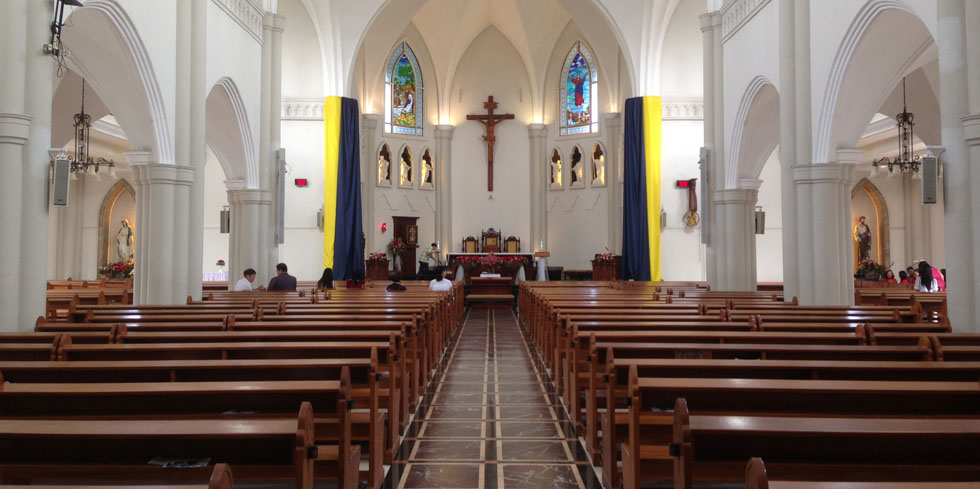
Catholic churches often provide a beautiful and memorable setting for a wedding, with features such as stained-glass windows, vaulted ceilings and intricate stonework. Many are steeped in history, lending the ceremony a sense of tradition and continuity. These striking surroundings create a graceful backdrop for photographs and help make the occasion feel truly special, while keeping the focus on the meaning of the marriage.
Support and guidance from the parish priest.
One of the benefits of getting married in a Catholic church is the support and guidance available from the parish priest. As you prepare for your wedding, the priest can explain the meaning of the sacrament, help you plan the ceremony and guide you through marriage preparation and any paperwork required. They can also offer a listening ear as you discuss your hopes for married life, helping you approach the day with confidence and a deeper understanding of the commitment you are making.
A chance to celebrate with your church community.
Getting married in a Catholic church gives you the chance to celebrate this important commitment with your church community. Family, friends and fellow parishioners can gather to pray for you, share in the joy of the occasion and offer their support as you begin married life. For couples who are active in parish life, the ceremony can feel especially meaningful: it brings together your faith, your relationships and the community that has been part of your journey.
A memorable start to married life together.
A Catholic church wedding can provide a memorable start to married life together. Surrounded by family, friends and a place of worship, you can make your vows in a ceremony rich in meaning and tradition. The sacred setting offers a special moment to reflect on the promises you are making and the faith, love and commitment you hope to share throughout your life together.
Church availability can be limited, especially for popular dates.
One drawback of choosing a Catholic church for your wedding is that availability can be limited, particularly for popular dates such as Saturdays in spring and summer. Churches may have several services and events in their calendar, so your preferred date or time might already be booked. It’s wise to contact the parish as early as possible and be prepared to consider alternative dates or times.
Marriage preparation and paperwork may take time to complete.
One possible drawback of getting married in a Catholic church is that the preparation and paperwork can take time to complete. Couples may need to attend meetings or a marriage preparation course, provide documents such as baptism certificates and arrange any required permissions. The process varies depending on your circumstances and the parish, so it is wise to speak to the priest early and allow plenty of time before your chosen wedding date.
Ceremony choices and decorations may be subject to parish rules.
One potential drawback of getting married in a Catholic church is that your choices for the ceremony and decorations may be limited by parish rules. The church may have guidelines on music, readings, flowers, photography and how the space can be arranged, so some ideas may not be possible. Check the requirements with the parish priest early on, before finalising your plans.